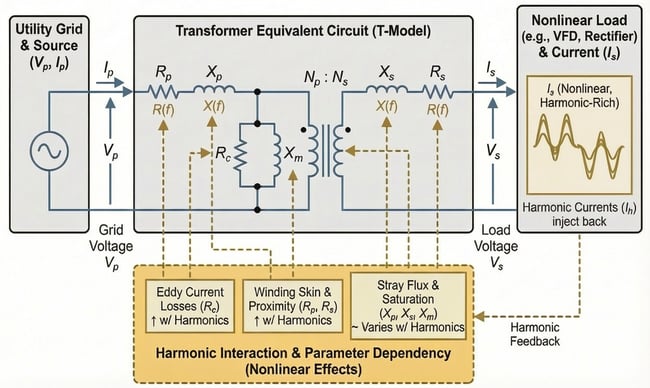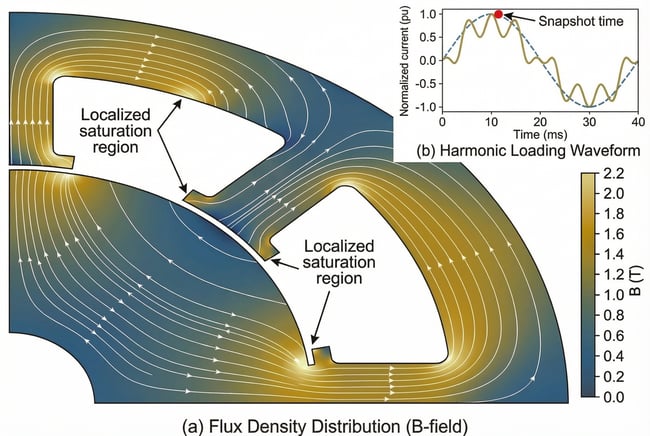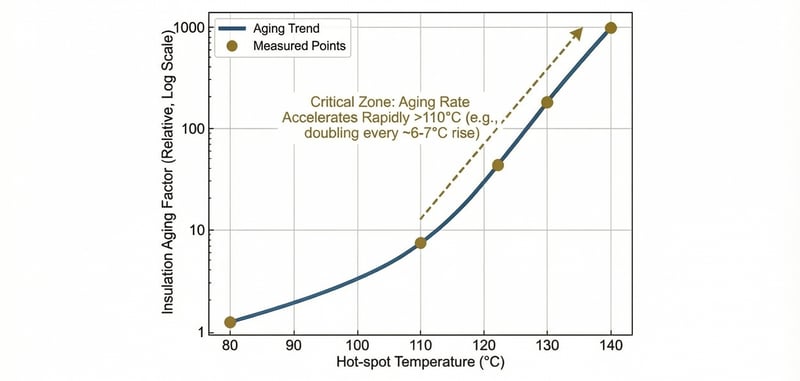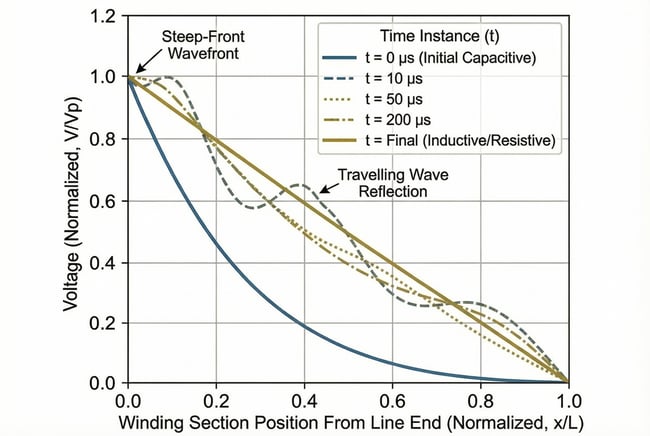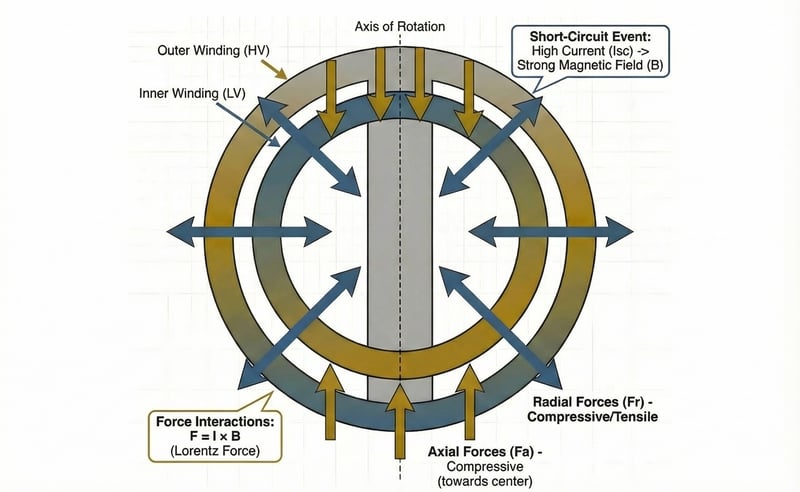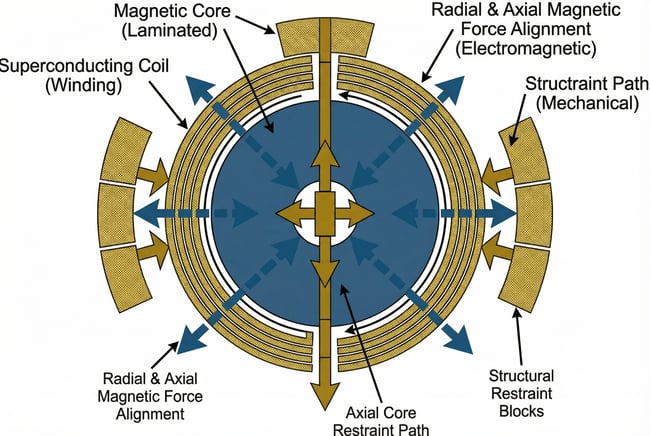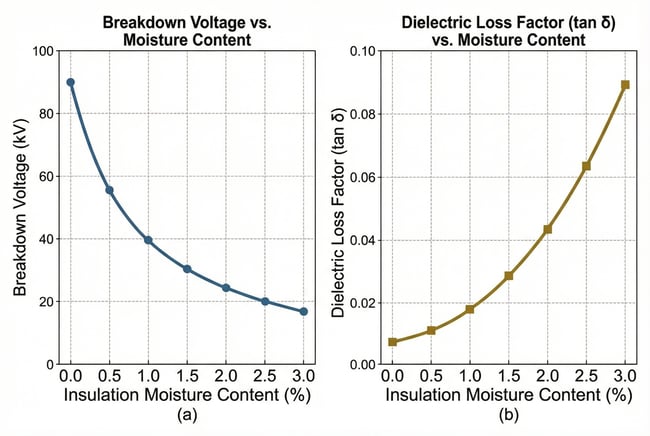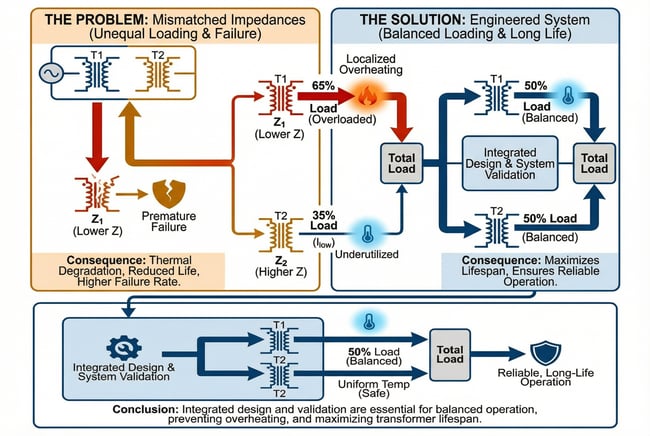
Many modern industrial facilities operate under electrical conditions that differ significantly from the steady-state sinusoidal assumptions underlying traditional transformer ratings. High-frequency switching, harmonic-rich loads, parallel transformer operation, and minimal tolerance for downtime increase exposure to elevated losses, localized insulation stress, mechanical loading, and uneven load sharing.
In converter-dominated environments, total harmonic distortion of current (THDi) commonly reaches 20–40%, depending on rectifier topology, pulse number, filtering, and system source impedance. These harmonic components alter loss mechanisms, flux distribution, and temperature rise in ways not fully captured by kVA rating or basic temperature-rise classification.
Under these conditions, the transformer functions as part of the electrical system rather than an isolated voltage-conversion device.
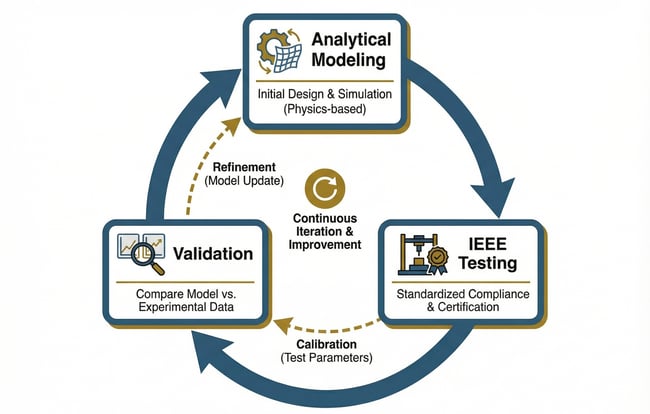
This document outlines an engineering framework for controlling primary failure mechanisms through:
-
System-level analytical modeling
-
Coordinated electrical, dielectric, thermal, and mechanical design
-
IEEE standards-based testing and validation
-
Manufacturing controls that preserve established design margins