
Performance is determined upstream. FAT confirms it.
By the time a transformer arrives on site, the outcomes that matter to operations have already been established. They were established in how the application was understood, in how the system was characterized, and in how every design decision was made around the conditions the transformer will actually face in the field.
Factory Acceptance Testing is where that work is validated, not created. When a Virginia Transformer unit clears FAT cleanly, it reflects a thorough, application-specific engineering process built around real operating conditions from the start. Everything that follows, commissioning, startup, and long-term performance, builds on that foundation.
The transformer that performs reliably over its full service life is the one whose design was derived from a complete understanding of the environment it would operate in.
Every application has a unique operating environment.
No two facilities run the same way. A geothermal plant, semiconductor fab, chemical facility, or data center each places demands on power infrastructure defined by how the system actually operates day to day, shift to shift, over decades of service.
Virginia Transformer starts with those real conditions. Load profiles, thermal environment, power quality, and system dynamics are fully understood before design begins. That insight drives every decision, from insulation and cooling to conductor sizing and protection. The result is a transformer built for its application, not a general case.
Project Spotlight
Cape Station · Fervo Energy
Designing for a non-standard generation environment
Geothermal generation operates outside conventional assumptions. Load dynamics, thermal cycling, and grid interactions differ from traditional generation in ways standard specifications do not capture.
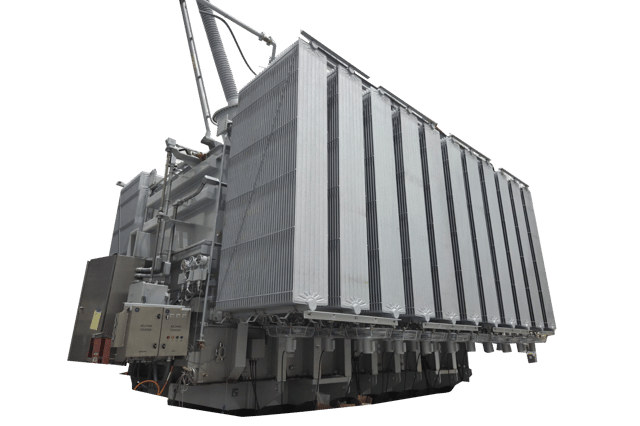
Virginia Transformer engineered the Cape Station main power transformer to match those conditions. The specification reflected the real operating environment, and the design was validated against actual duty cycle and thermal demands before manufacturing. FAT confirmed the engineering. Commissioning and full operation are still ahead, but the technical foundation is in place.
The engineering sequence that makes it possible.
Reliable performance on complex applications isn't the result of a single decision. It's the result of a defined sequence, where each stage builds on the clarity of the work before it.
Load and system characterization
Load variability, power quality, harmonic content, and system dynamics documented and translated into design requirements before procurement begins.
Thermal modeling against the actual duty cycle
Hot-spot temperature rise calculated under the real operating profile — not a generic load factor. Cooling design that reflects how the system actually runs.
Dielectric design for the actual electrical environment
Insulation coordination modeled to the system's power quality and harmonic profile. No assumptions carried forward from a different application type.
Application-specific specification
A specification precise enough to guide manufacturing and define FAT criteria based on real performance requirements, not generic test standards.
Factory Acceptance Testing as confirmation
When upstream engineering is complete, FAT validates the design model. Measured performance aligns with predicted performance because both were derived from the same operating reality.
Lead time is an engineering outcome.
Most transformer schedule disruptions trace back to the same upstream sources: specification ambiguity, design iterations driven by incomplete application data, and late-stage changes that require manufacturing rework. These are engineering problems — and they have engineering solutions.
A complete, application-specific specification developed in close coordination between the customer and the VTC engineering team eliminates the primary sources of schedule pressure. Long-lead material procurement begins with confidence. Design revision cycles are compressed. Manufacturing has a stable build package from the start. The result is a predictable lead time and a unit that integrates cleanly into the operation it was built to serve.
Virginia Transformer Corp designs, builds, and tests power transformers for complex, high-demand applications across energy, semiconductor, data center, chemical, and industrial markets. When the operating environment is specific and the stakes are high, Virginia Transformer is engineered for it.